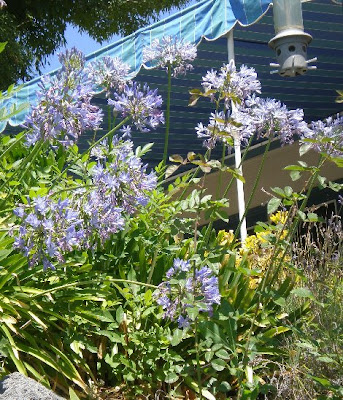
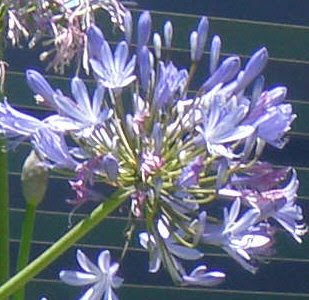
 Agapanthus is sometimes called Lily of the Nile, African Blue Lily, or similar names. There are several species of this South African native, but most sold in nurseries here are agapanthus praecox or its subspecies agapanthus orientalis, even though they are sometimes mislabeled as agapanthus africanus. Once established, they are drought tolerant, and do well in almost any area with well-drained soil. They like full or part sun, and bloom during spring and summer. Some produce white flowers, others are light blue or lavender. Hummingbirds love them!
Agapanthus has rhizomatic roots, and can be propagated by division. The best time to do this is in the fall when blooming is over. You can simply dig up a clump, divide it into a few sections, and plant each one separately. They will also sometimes spread on their own. When you are working with this plant, be aware that its sap can be extremely irritating, causing a poison-ivy like rash on the skin, and severe ulceration of the mouth and mucous membranes. I wear long sleeves and/or elbow-length gloves when I cut or replant them.

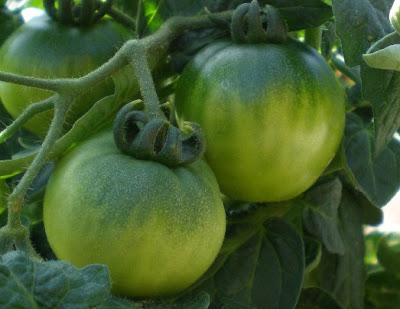 My little "patio tomato" plant is progressing nicely. It sits in a pot at the edge of the patio, of course. I also have a pair of larger plants in another part of the garden that are just starting to develop fruit.
  Today marks the beginning of mandatory water usage reduction in Los Angeles. Yes, San Fernando Valley, that means you, too.
 This California pepper tree (Schinus molle) is a volunteer in my garden. Less than two years old, it is already more than ten feet tall. Originally it had two main branches veeing away from the base, but one was damaged by winter storms and had to be cut away. The tree now has about half the volume it would otherwise have had.

